Reviewing the Vector Medical Appointment Line Icon for Embroidery
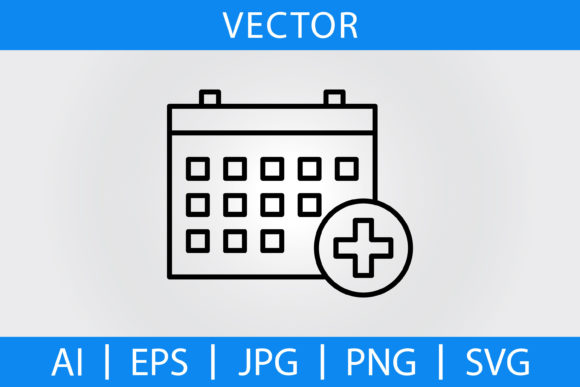
As a designer who spends half my life staring at digitized files and the other half watching needles punch through fabric, I have learned that not every graphic translates well to thread. When I first pulled up the Vector Medical Appointment Line Icon, my initial reaction was one of cautious optimism. In the world of Icons and Graphics, medical imagery can often feel sterile or overly complex. However, this particular line icon offers a clean, minimalist aesthetic that suggests it could bridge the gap between digital clarity and tactile craftsmanship.
The mood this design creates is professional yet approachable. It does not scream "hospital emergency" with jagged edges or aggressive boldness. Instead, it whispers "care" and "precision." For an embroidery project, this visual personality is crucial. It feels like it belongs on items meant to convey trust and reliability, rather than high-energy sports gear or whimsical children’s decor. The layout is balanced, with a level of detail that is low enough to be readable at small sizes but distinct enough to hold its own as a focal point.
Real-World Application: The Custom Clinic Tote
To truly evaluate this asset, I imagined a specific real-life scenario. A local nurse practitioner approached me about creating branded merchandise for her private practice. She wanted something subtle for staff uniforms and patient gifts. I envisioned using the Vector Medical Appointment Line Icon on a high-quality canvas tote bag. This is a common request for Etsy sellers and small shop products alike.
In this context, the icon performs exceptionally well. Because it is a line-based design, it avoids the heavy fill stitch areas that can make fabric pucker or become stiff. On a tote bag, which needs to remain flexible and durable, this is a significant advantage. The design would likely translate beautifully using a simple running stitch or a narrow satin stitch outline. Patients receiving these bags would perceive the brand as modern and organized, enhancing customer trust through thoughtful handmade product presentation.
Versatility Across Apparel and Home Goods
Beyond totes, this icon has strong potential in custom apparel. Imagine it embroidered on the left chest of a scrub top or a polo shirt. The simplicity ensures it remains legible even when scaled down. For sweatshirt embroidery, the icon could serve as a small, understated logo on the sleeve or hem, adding a touch of professionalism without overwhelming the garment.
I also see potential in the home goods sector. A pillow cover or a set of kitchen towels featuring this motif could make for a unique personalized gift for healthcare workers. The clean lines complement the texture of linen or cotton twill nicely. However, when considering baby embroidery, one must be careful. While the medical theme is relevant for pediatric clinics, the sharp angles of some medical icons can feel too rigid for nursery decor. This specific line icon, being softer in its curvature, might work on a baby blanket if paired with pastel thread colors, but it requires a gentle touch in execution.
Technical Considerations for Stitching
From a technical standpoint, working with vector-based assets like this requires attention to digitization settings. Since the product description lists formats such as AI, EPS, SVG, JPG, and PNG, it is clear this is primarily a graphic asset. It is not necessarily a pre-digitized machine embroidery design file like DST or PES. This distinction is vital for craft business owners. You will need to use embroidery software to convert these vectors into stitch files.
When converting, pay close attention to stitch density. Line icons can sometimes result in single-stitch lines that are too thin to cover the fabric properly, leading to gaps where the background shows through. I recommend expanding the stroke width slightly during the digitizing phase to allow for a proper satin column. Also, consider the hoop size. If you are placing this on a curved surface like a cap, ensure the design is small enough to avoid distortion but large enough that the stitches do not merge into a blob.
Fabric choice matters immensely here. On textured fabrics like terry cloth or fleece, fine lines can get lost. In these cases, you might need to increase the stitch count or add a slight backing to ensure the icon pops. Conversely, on smooth, stable fabrics like poplin or denim, the crispness of the line icon will shine. Always test the design on scrap fabric first. Check how the thread colors contrast against both light and dark backgrounds. A white thread on a navy scrub top looks professional, but ensure your stabilizer is sufficient to prevent puckering around the tight curves of the icon.
Navigating Limitations and Best Practices
There are scenarios where this design should be used carefully. Avoid placing it on highly stretchy fabrics without a cut-away stabilizer, as the tension can distort the geometric precision of the icon. Tiny details in the corners of the design may not stitch out cleanly if the needle size is too large relative to the design scale. If you are creating an embroidered patch, consider using a dense border to frame the icon, giving it a finished, badge-like appearance that enhances durability.
For those selling digital embroidery files or finished items, always confirm licensing before commercial use. The provided formats suggest versatility for print and web, but embroidery rights can vary. Ensure you have the right to sell products featuring this design asset. Additionally, when creating printable mockups for your online store, remember that a vector graphic on a screen looks sharper than stitched thread. Manage customer expectations by showing realistic photos of the stitched result, not just the digital preview.
Final Verdict on Visual Appeal and Value
The Vector Medical Appointment Line Icon is a strong contender for professionals looking to elevate their commercial embroidery offerings. Its strength lies in its adaptability. It does not dictate a specific style but rather supports the brand identity of the user. Whether used for holiday embroidery gifts for medical staff or as part of a boutique’s branding suite, it adds a layer of sophistication.
By focusing on clean lines and avoiding unnecessary complexity, this icon reduces the risk of stitching errors and increases the longevity of the finished product. It is a practical choice for creative entrepreneurs who value efficiency and quality. Just remember to treat it as a starting point for your digitizing process, adjusting for fabric texture and hoop constraints to ensure the final finished product meets the high standards of your clientele.